
Lucid Secures Another $1.5 B from Saudi Arabia—What This Means for the Gravity’s Future
The latest injection from Saudi’s PIF and Prince Alwaleed underscores the kingdom’s faith in Lucid, but the automaker still faces a long road to profitability and high‑volume sales of its flagship Gravity SUV.
By Adrian Holt · Updated August 16, 2026 at 12:51 PM
A New Lifeline for Lucid
Lucid Motors, the Silicon Valley‑born electric‑vehicle startup that has been chasing the dream of a truly premium EV since 2011, has just closed a fresh $1.5 billion round led by Saudi Arabia’s Public Investment Fund (PIF). The move, announced in late July, comes on the heels of Prince Alwaleed bin Talal’s purchase of a 5 % stake in the company. The PIF has already held a majority stake in Lucid for several years, and this latest tranche is the largest single infusion the automaker has ever received.
While the headline figures sound impressive, the reality is that Lucid has been operating at a loss since it began production of its Air sedan. According to a CarBuzz piece, the company has never posted a profit in the decade‑long history of its operations. The new funding, therefore, is a lifeline that keeps the company afloat while it works to hit the production volumes needed to become financially viable.
“The fact that the Kingdom continues to invest in Lucid tells us that there is confidence in the technology and the leadership, but it also highlights how far the company still has to go,” a senior analyst at a boutique EV research firm told me in a recent call.
Why Saudi Arabia Is Betting Big
The PIF’s involvement is part of a broader strategy to diversify Saudi Arabia’s economy away from oil. By backing Lucid, the kingdom is looking to position itself as a key player in the global EV supply chain. The partnership extends beyond capital; the PIF has secured a strategic supply agreement for key components, including high‑capacity batteries and advanced power electronics.
Prince Alwaleed’s stake is especially noteworthy because he operates independently of the PIF. His purchase signals personal confidence in Lucid’s prospects. Though the exact terms of the stake sale are confidential, reports suggest the transaction was valued at roughly $150 million for 5 % of the company.
The Gravity’s Production Puzzle
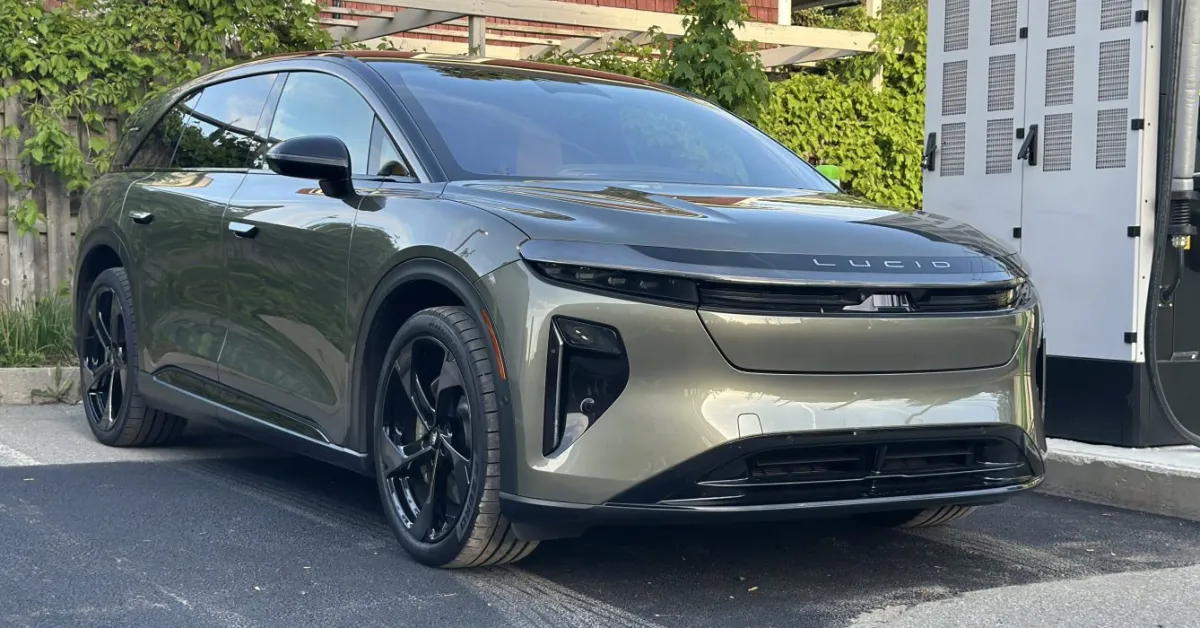
Lucid’s newest model, the Gravity SUV, was unveiled in 2022 with lofty claims of up to 1,000 miles on a single charge and a 0‑to‑60 acceleration time of under 3.5 seconds. However, the Gravity’s launch has been hampered by supply‑chain constraints and a steep learning curve in mass production. The company’s current output stands at only a few hundred units per week, far below the 5,000‑unit per month target needed to break even.
The new capital is earmarked for expanding the factory in Casa De Maderas, California, and for ramping up the production of the Gravity’s advanced battery packs. Lucid’s chief executive, Peter Rawlinson, said the company’s goal is to reach 20,000 units per year by the end of 2025, but analysts note that hitting that target will require significant operational efficiencies and cost reductions.
Profitability: A Long‑Term Goal
Lucid’s financials paint a picture of a company still in a development phase. In its most recent quarterly report, the company posted a loss of $200 million on sales of $700 million—an 28 % profit margin that is far from the break‑even point. The new funding will help cover these operating losses for the next 18–24 months, but it does not solve the underlying issue of unit economics.
There is also uncertainty about how much of the $1.5 billion will be used for marketing and sales acceleration. Some insiders have speculated that a portion will go toward expanding the company’s dealer network and after‑sales infrastructure, which could help boost Gravity sales. However, no official breakdown has been released.
The Broader Implications for EVs
If Lucid can turn the tide, the Gravity could become a benchmark for high‑performance electric SUVs, competing directly with models like the Tesla Model X and the Ford F‑150 Lightning. Success would also signal that Saudi Arabia’s strategic investments in EVs are paying off, potentially paving the way for more sovereign funds to diversify into green technology.
On the flip side, a failure could serve as a cautionary tale for other EV startups relying on sovereign capital. The market is becoming increasingly competitive, and even a $1.5 billion infusion may not be enough to sustain a company that has yet to hit a single profit margin.
Bottom Line
Lucid’s latest $1.5 billion from the PIF and Prince Alwaleed’s 5 % stake reinforce the kingdom’s commitment to the company, but the road to profitability remains steep. The Gravity’s production ramp-up and sales performance will be the critical tests in the coming months. For now, Lucid is riding a financial lifeline that keeps it alive while it works to translate its ambitious vision into commercial reality.
The story of Lucid is a reminder that in the fast‑moving EV arena, capital, technology, and execution must all align for a startup to thrive.