The Numbers Behind the Gamble
In a startling announcement that rattled the tech community, South Korea reportedly committed $576 billion to AI chip production. The figure—originating from a brief tweet by the account @AmericanGoodTimes and echoed in several news outlets—has not yet been independently verified by Seoul’s Ministry of Trade, Industry and Energy. If accurate, it would dwarf the country’s previous multi‑year semiconductor investment plans and signal an aggressive push to dominate next‑generation AI hardware.
The money is earmarked for a mix of foundry expansion, research & development, and policy incentives aimed at attracting global AI chip designers. Samsung Electronics and SK Hynix, already the world’s leading semiconductor manufacturers, are expected to drive the majority of this spending, while smaller firms are encouraged to carve out niche segments such as AI accelerators and neuromorphic processors.

“South Korea’s semiconductor boom risks flatlining under US–China pressure,” an analysis on the East Asia Forum notes, underscoring the geopolitical stakes that accompany such a fiscal outlay.
How the U.S. Fits Into the Equation
America remains the epicenter of AI software innovation, home to OpenAI, Google DeepMind, and countless start‑ups that are shaping the direction of AI research. However, hardware supremacy—the ability to manufacture the silicon that powers these systems—has always been a critical lever of influence. The U.S. still leads in design, with firms like NVIDIA, AMD, and Google’s Tensor Processing Unit (TPU) dominating the market for AI‑specific chips.
But manufacturing has become increasingly contested. The U.S. semiconductor industry is heavily reliant on foreign foundries: 80‑plus percent of advanced logic chips are produced abroad, with a majority in Taiwan and China, and a growing share in South Korea. The Biden administration’s CHIPS Act has pledged $52 billion to bolster domestic production, but the pace of new fabs and the cost of scaling state‑of‑the‑art fabs remain daunting.
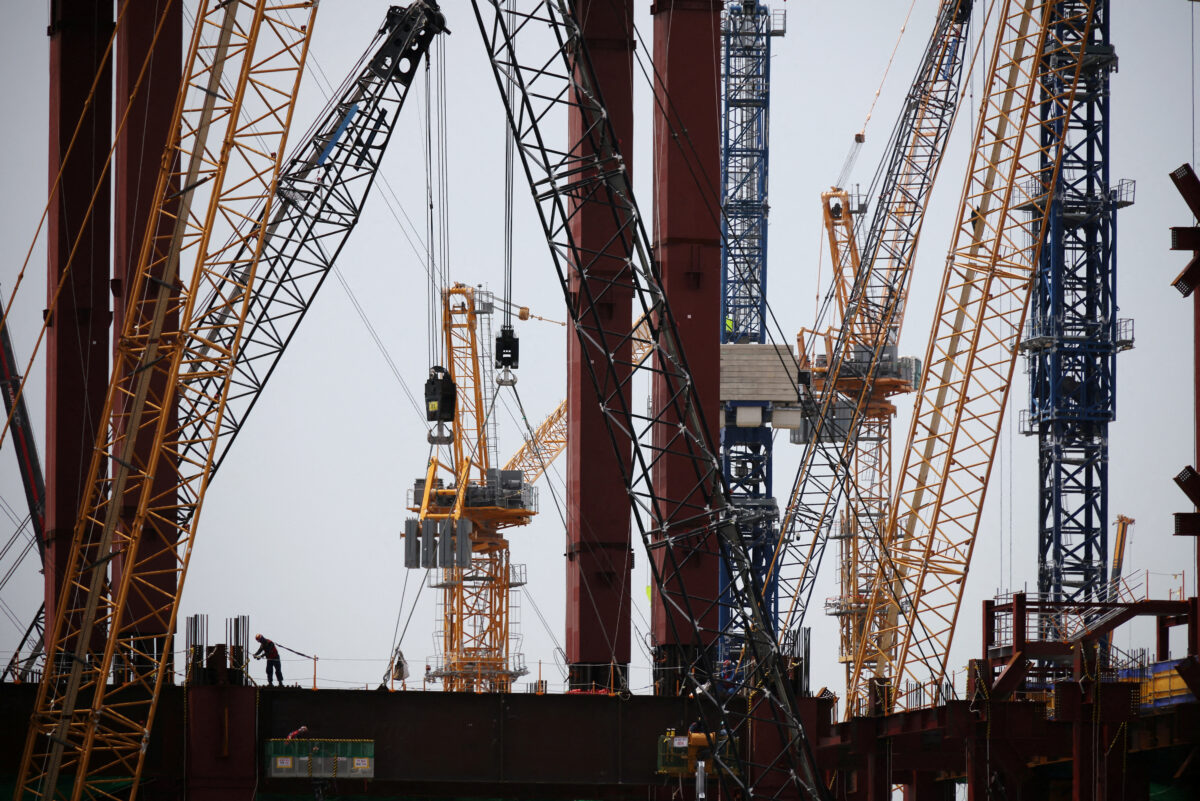
South Korea’s commitment could close that gap. By investing heavily in EUV lithography and advanced packaging, Samsung and SK Hynix may leap ahead of U.S. competitors in delivering smaller, more power‑efficient AI chips. Moreover, the country’s policy ecosystem—tax incentives, streamlined permitting, and a culture of close industry‑government collaboration—provides a template that could be replicated elsewhere.
The Strategic Ripple Effect
For the U.S., the stakes go beyond market share. AI chips are now integral to national security, autonomous vehicles, smart infrastructure, and cloud services. If South Korea—or any other country—achieves a technological edge, it could influence the direction of AI policy, export controls, and the global supply chain.

In a recent Senate subcommittee hearing titled “Measuring What Matters: Science, Standards, and Strategic Competition,” several U.S. officials highlighted the China challenge and the importance of maintaining a lead in both software and hardware. Yet they also acknowledged that diversification of supply chains could serve as a counterbalance. The U.S. might double‑down on partnerships with allies, such as Japan and Taiwan, and accelerate domestic fabs like those planned by Intel and TSMC’s U.S. facilities.
Meanwhile, European players have announced ambitious chip initiatives, and India is investing heavily in domestic fabs to reduce reliance on global supply chains. The global semiconductor arena is rapidly morphing into a multi‑pole contest, with South Korea emerging as a formidable swing state.
What’s Next?
Uncertain facts: While the $576 billion figure is widely reported, official confirmation has yet to materialize. The precise allocation—how much goes to Samsung versus SK Hynix versus new entrants—remains unclear. Additionally, the timeline for these investments is ambiguous; some estimates suggest a 5‑year horizon for full deployment.
South Korea’s leadership is not just a matter of money. The country boasts an extremely skilled workforce and a history of rapid technological adoption. If the investment translates into tangible productivity gains and a surge in AI chip exports, the U.S. may need to reassess its strategy.
Possible responses include:
- Accelerating domestic fab construction – expanding the U.S. semiconductor workforce and incentivizing private capital.
- Strengthening international alliances – coordinating with allies on shared standards and supply chain resilience.
- Investing in AI‑hardware R&D – ensuring that U.S. design firms can outpace competitors in innovation speed.
Ultimately, the question is not whether the U.S. will be worried—the answer is a resounding yes—but whether it will be prepared.
Bottom Line
South Korea’s massive chip‑investment package could redefine the balance of power in the AI hardware arena. While the U.S. retains an edge in software and design, its reliance on foreign fabs and the aggressive funding in Seoul signal a potential shift. For the American tech ecosystem, this development underscores the need for a cohesive, multi‑layered strategy that balances innovation, manufacturing, and geopolitical resilience.
 AI
AI