EV/Charging & Infrastructure/Public Charging
Humanoid Robots Are Heading to Public Markets — What That Means for the Industry
From Unitree to Agility Robotics, Chinese companies are rushing IPOs as investors eye the future, but reliability, safety and cost remain open questions.
By Wren Holloway · Updated August 16, 2026 at 7:18 AM
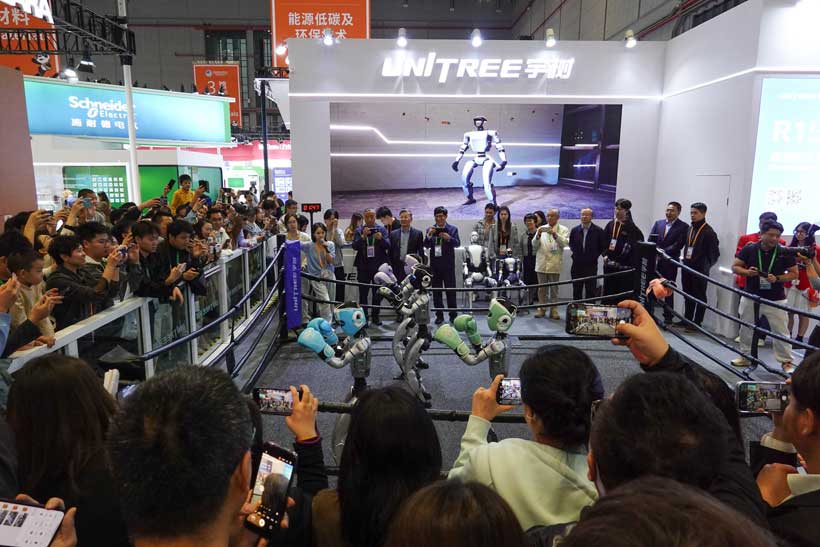
Humanoid robots are increasingly making their way to public markets, driven by significant investment and government support in China.
Why China Is Leading the Charge
China’s dominance in the humanoid arena is no accident. In the early 2020s, the country funneled nearly half of all venture capital into robotics, and by 2026 it had attracted close to 50% of global investment in the field. The result? A dizzying concentration of talent, manufacturing capacity, and an ecosystem that rewards scale. The government has also stepped in with subsidies and regulatory nudges, ensuring that companies can prototype, test, and deploy at a rate that outpaces Western competitors.
This backdrop has set the stage for a new wave of IPOs. Unitree Robotics, the Shenzhen‑based firm that showcased a kung‑fu‑style robot during the Lunar New Year, announced a planned listing that could value the company at more than $4 billion. Their move is part of a broader strategy to tap public funds for the next generation of agile, multi‑purpose robots.
The IPO Wave
Unitree is not alone. Leju Robotics, a start‑up known for its small‑footed, high‑speed humanoids, has also signaled intentions to go public. Agility Robotics, the U.S. firm that built the Cassie and Digit platforms, is testing market appetite by gauging investor reaction through a series of private rounds before an eventual IPO.
These companies are betting on a narrative that humanoid robots will become ubiquitous in logistics, customer service, and even personal assistance. Their IPOs promise not just capital but also visibility, a stamp of credibility that can unlock larger contracts with governments and multinational corporations.
Investor Appetite and Valuation Challenges
While the narrative is compelling, it is unclear whether the current valuation multiples will hold. Analysts point out that the real‑world deployment of humanoids outside controlled lab settings remains limited. Without a proven track record of reliable operation, safety compliance, and a clear revenue model, the risk profile is high. Agility Robotics, for instance, faces a valuation challenge because the market is wary of a company that has yet to demonstrate sustainable profitability.
Investors are also looking at the 97% figure: 97% of humanoid robots come from China. This statistic highlights a potential over‑reliance on a single geography for both manufacturing and talent. If the U.S. or EU markets continue to lag behind in adoption, the demand curve could flatten, making it difficult for IPO‑listed firms to scale.
Reliability and Safety: The Uncertain Frontier
The technical hurdles are real. Humanoid robots must navigate uneven terrain, pick up objects of varying sizes, and interact safely with humans—all while maintaining low power consumption and high endurance. Failure in any of these areas can quickly erode trust and lead to costly recalls.
Current prototypes often require extensive human supervision. Even the most advanced models can only operate safely for a few hours before needing a recharge. The cost of battery technology, coupled with the complexity of locomotion algorithms, keeps the economics tight.
Because of these uncertainties, regulators and insurance firms are still drafting frameworks that can accommodate the unique risks posed by humanoids. Until those frameworks are settled, IPO‑listed robotics firms will face additional compliance costs.
What This Means for the Global Robotics Landscape
If the IPO wave succeeds, it could catalyze a new era of robotics development. Publicly traded companies would have access to larger capital pools, enabling them to invest in AI‑driven perception systems, more efficient power architectures, and mass‑production techniques that reduce per‑unit costs.
At the same time, the concentration of humanoid technology in China could spur a strategic arms race in robotics capabilities. Competitors in the U.S. and Europe may respond by accelerating R&D in collaborative robotics or by forming joint ventures to share the high upfront costs.
For consumers, the most immediate implication is a potential influx of humanoid robots into everyday spaces—think delivery drones that can navigate stairs or service robots that can walk into a coffee shop. However, until reliability and safety standards catch up with the pace of deployment, widespread adoption may remain a distant prospect.
In sum, the push to go public is a double‑edged sword. It provides the capital necessary to solve the core engineering challenges, but it also exposes the industry to market pressures that could favor speed over safety. The next few years will reveal whether the IPO wave is a launchpad for mainstream humanoid robots or a cautionary tale about over‑ambition in a nascent field.