
Computing/More from Computing/Computing News
Memory Supply is Now Part of the Edge Computing Decision: An In-Depth Analysis
Exploring the critical role of memory supply in edge computing and its impact on performance, cost, and product viability.
By Kai Sullivan · Updated August 17, 2026 at 8:03 AM
Memory Supply is Now Part of the Edge Computing Decision: An In-Depth Analysis
Overview
The landscape of edge computing is evolving rapidly, and one of the most critical factors influencing this evolution is the supply and demand dynamics of memory components. As edge devices proliferate, the need for efficient memory solutions has become paramount. This article explores the integral role memory supply plays in edge computing decisions, highlighting how it impacts performance, cost, and product viability.
The Memory Landscape in Edge Computing
The Great Memory Pivot
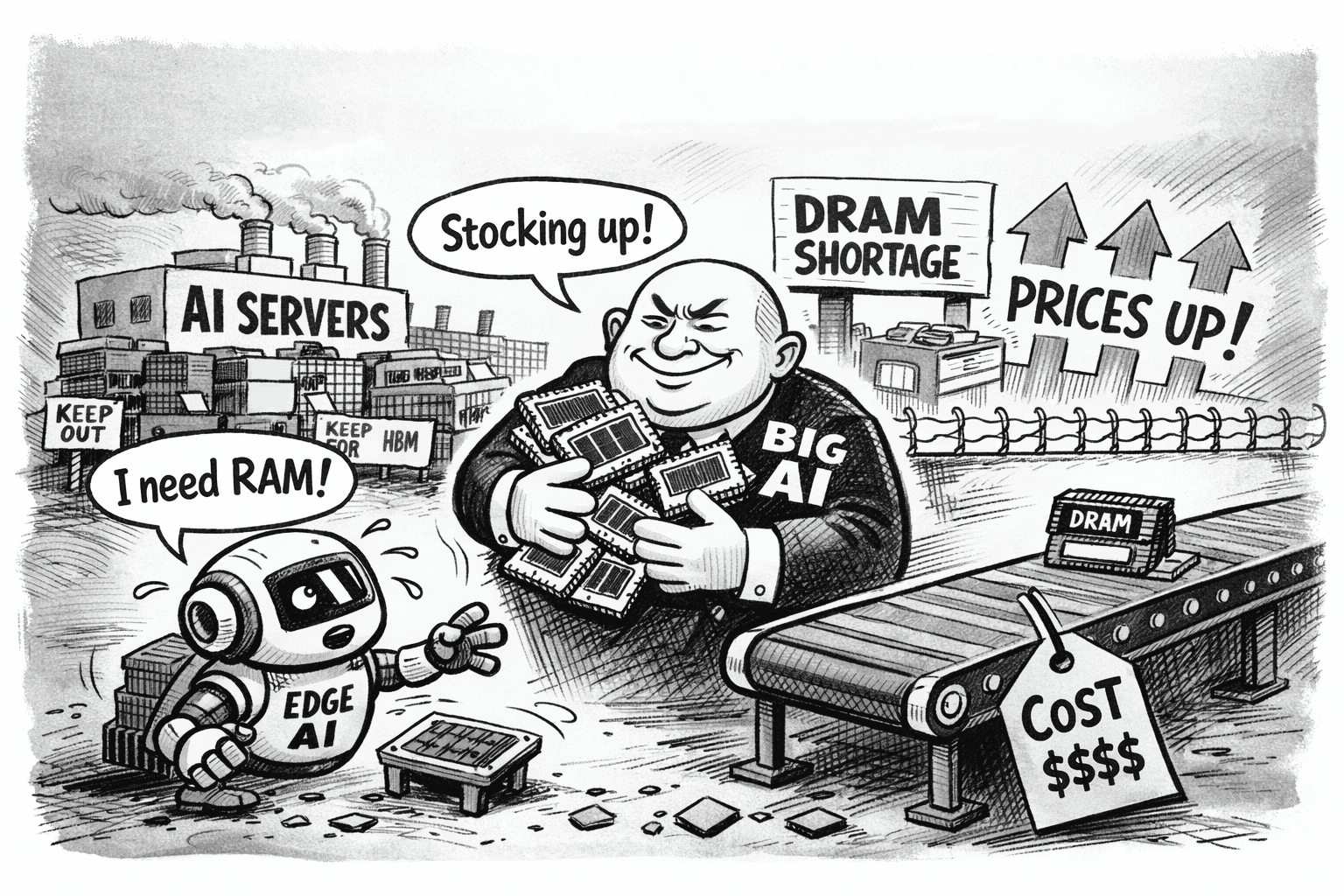
Recent trends indicate a significant shift in the memory market, often referred to as the "Great Memory Pivot." This shift is characterized by a growing divide between AI infrastructure and traditional memory applications. As demand for AI capabilities skyrockets, manufacturers are reallocating resources towards high-margin AI-focused components, leading to tighter supply and increased prices for conventional memory types such as DRAM and LPDDR.
Memory as a Capacity-Allocated Input
Historically, memory has been treated as a commodity. However, the current market dynamics are transforming it into a capacity-allocated input. This means that edge computing teams must now consider not just the cost of memory but also its availability and the implications of stockpiling behaviors among major OEMs. Companies are increasingly finding themselves in a position where their product decisions hinge on memory availability rather than purely technical specifications.
The Role of LPDDR in Edge Applications
Low-Power Double Data Rate (LPDDR) memory is ubiquitous in edge computing applications, powering devices from smart cameras to robotics. The supply of LPDDR4X and LPDDR5X is expected to remain constrained, which poses challenges for edge AI teams that rely on these components for their systems. As memory becomes less available, the implications for capacity and cost become more pronounced.
LPDDR Memory in Action
-
Smart Cameras: LPDDR memory is crucial in smart cameras, enabling real-time image processing and analytics. For instance, the latest models from manufacturers like Hikvision and Dahua leverage LPDDR for enhanced performance in surveillance applications. Hikvision's DeepinView series uses LPDDR4X to handle complex AI algorithms for object detection and tracking, ensuring high-quality video feeds without latency. These cameras are equipped with advanced features like facial recognition and anomaly detection, which require significant memory bandwidth to operate effectively.
-
Robotics: Companies like Boston Dynamics utilize LPDDR in their robotic systems, where low power consumption and high-speed data transfer are essential for operational efficiency. The Spot robot, for example, relies on LPDDR5 for its onboard processing capabilities, allowing it to perform tasks such as mapping and navigation in real-time. The integration of LPDDR5 enables Spot to process sensor data efficiently, facilitating complex movements and interactions in dynamic environments.
Design Considerations for Edge AI
Memory Optionality as a Design Requirement
In the face of memory shortages, edge AI product teams are adopting a strategy of "memory optionality." This involves designing systems that can support multiple memory configurations without requiring a complete redesign. This flexibility allows teams to adapt to changing supply conditions and reduces the risk of project delays.
Practical Patterns for Design
-
PCB/Layout Options: Designing printed circuit boards that can accommodate different memory densities or vendors. For example, companies like NVIDIA have implemented flexible PCB designs in their Jetson series to support various memory configurations. The Jetson AGX Orin can be configured with different LPDDR5 memory options, allowing developers to optimize for performance or cost based on availability. This flexibility is crucial for developers working in rapidly changing markets where memory availability can fluctuate dramatically.
-
Firmware Adaptability: Implementing firmware that can adjust model scheduling based on available RAM. This adaptability is crucial for companies like Google, which optimizes its TensorFlow Lite models for edge devices with varying memory capacities. By dynamically adjusting the model complexity, Google ensures that applications can run smoothly even on devices with limited memory, thus enhancing user experience and operational efficiency.
-
Graceful Degradation: Creating feature flags that allow systems to function with reduced memory without compromising core capabilities. This approach has been adopted by companies like Microsoft in their Azure IoT Edge platform, which ensures continuous operation even under memory constraints. For example, Azure IoT Edge can scale down processing tasks in response to available memory, ensuring critical functions remain operational, which is vital for industries where downtime can have significant repercussions.
Supply Chain Strategy in AI Development
As memory constraints tighten, edge AI strategies are increasingly intertwined with supply chain considerations. Companies are focusing on shipping memory-efficient capabilities rather than merely enhancing accuracy. This shift necessitates engineering investments in areas such as:
-
Activation-aware quantization: This technique reduces the memory footprint of AI models without significantly impacting performance, making it a priority for firms like Intel and AMD as they enhance their edge AI offerings. Intel's OpenVINO toolkit, for instance, incorporates such techniques to optimize models for low-power devices, allowing for more efficient use of memory resources.
-
Streaming and tiled vision pipelines: These methods optimize memory usage during video processing, allowing companies like Qualcomm to deliver high-performance edge AI solutions in mobile devices. The Snapdragon platform utilizes tiled processing to manage memory efficiently while running multiple AI tasks simultaneously, ensuring that memory bottlenecks do not hinder performance.
-
Smarter scheduling to mitigate peak memory usage: Companies like Amazon Web Services (AWS) are developing advanced scheduling algorithms that dynamically allocate memory resources based on real-time workload demands. AWS's Lambda service, for example, adjusts memory allocation based on the specific needs of each function, optimizing resource usage and cost, which is critical for businesses operating in cloud environments where scalability is essential.
The Economic Impact of Memory Supply
Rising Costs and Budgeting Strategies
With memory and SSD prices projected to rise significantly, early planning has become essential for organizations looking to protect their budgets and timelines. Major manufacturers like Intel are diverting production towards AI-optimized processors, which further complicates the supply landscape for edge systems.
Projected Market Growth
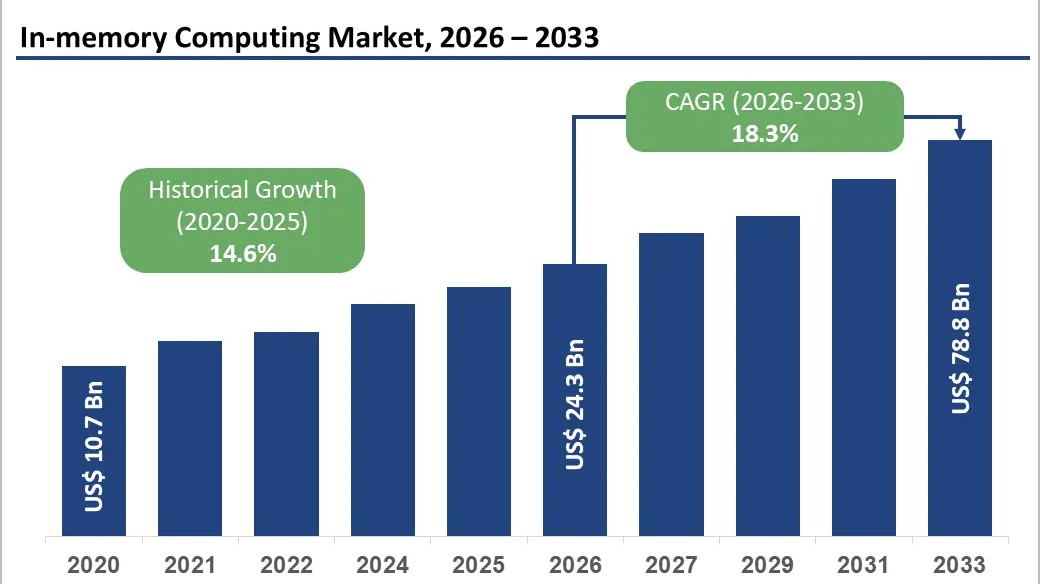
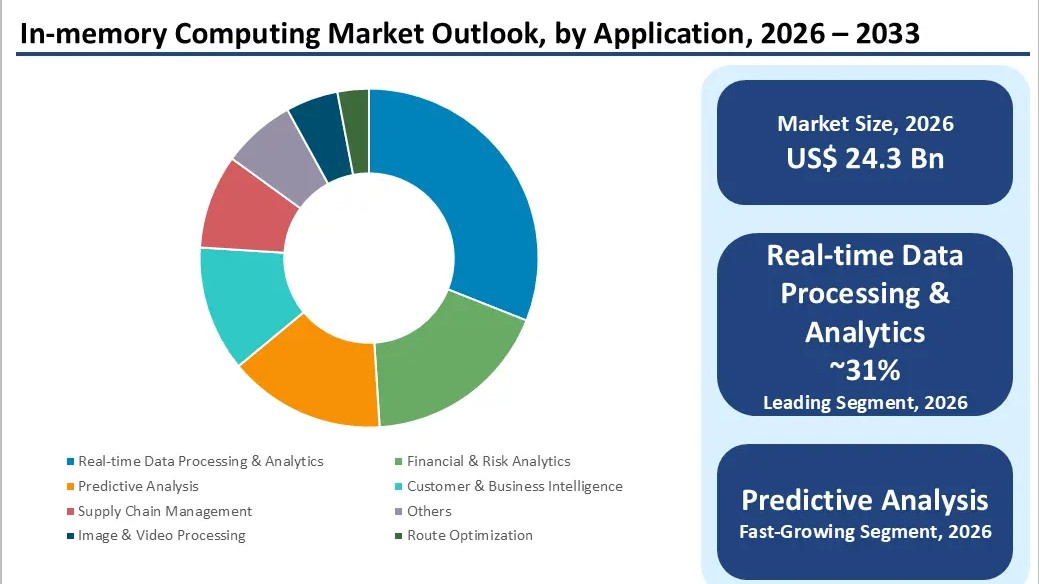
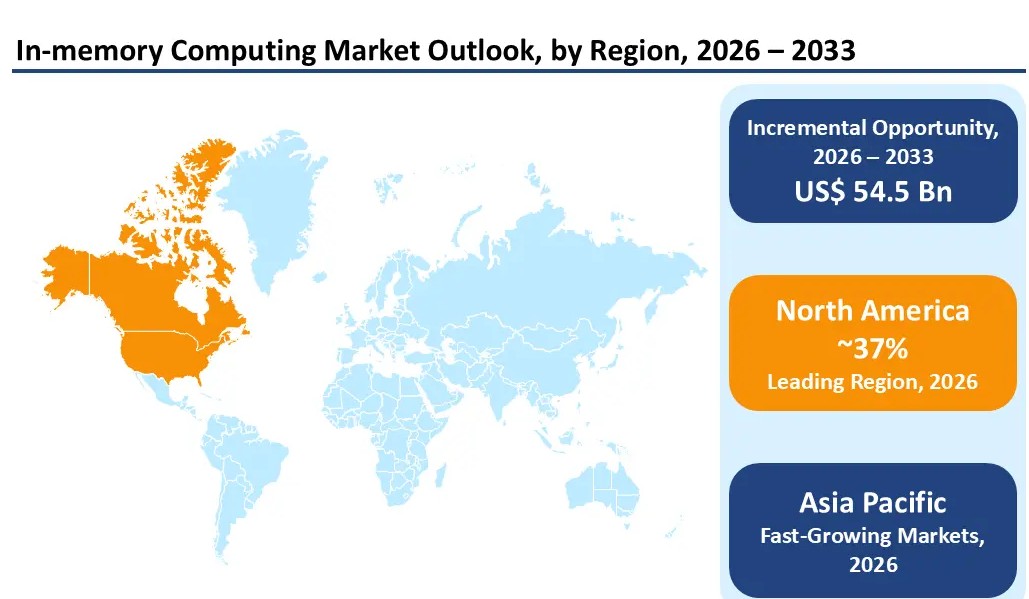
The in-memory computing market is projected to grow from $24.3 billion in 2026 to $78.8 billion by 2033, driven by demand for real-time AI inferencing and ultra-low-latency data processing. This growth underscores the increasing importance of memory solutions in edge computing. Research from MarketsandMarkets indicates that the rise of IoT devices and the need for real-time data analytics are primary drivers of this growth. As organizations continue to adopt edge computing, the demand for efficient memory solutions will only intensify.
The Impact on Smaller OEMs
As larger companies stockpile memory components to secure their supply chains, smaller and mid-sized edge OEMs find themselves at a disadvantage. These companies often have to resort to spot markets, leading to last-minute substitutions and increased costs. This competitive imbalance can result in smaller firms redesigning their products based on available components rather than optimal configurations.
Case Studies of Smaller OEMs
-
Startup Challenges: Startups like Deep Vision have reported difficulties in securing LPDDR4X for their AI-driven surveillance solutions, leading to delays in product launches. Deep Vision's reliance on specific memory types for their high-performance cameras has forced them to rethink their supply chain strategies, often leading to increased costs and longer development cycles. The inability to secure necessary components has also hampered their ability to compete with larger firms that can afford to stockpile.
-
Redesigning Products: Mid-sized companies such as Aaeon have had to redesign their edge computing devices to accommodate alternative memory solutions, impacting their time-to-market and profitability. Aaeon’s UP board series, initially designed with specific memory configurations, had to be adapted to support different memory types due to supply issues, which delayed their product rollout. This redesign not only increased costs but also strained their engineering resources, affecting their overall competitiveness in the market.
Performance Implications
Memory Constraints in Edge AI Workloads
The performance of edge AI systems is heavily influenced by memory constraints. As workloads become more complex, the demand for bandwidth increases. Many edge systems are memory-traffic-bound, meaning that the performance is limited by memory access speeds rather than computational power.
Concurrency and Peak Usage
The shift towards more concurrent workloads—such as simultaneous video streams or complex AI models—introduces new challenges. Systems must be designed to handle peak usage scenarios without crashing or experiencing significant latency. This requires careful planning and optimization of memory resources.
Real-World Examples
-
Video Surveillance: In smart city applications, edge devices must process multiple video feeds simultaneously. Companies like Axis Communications have developed specialized hardware that optimizes memory access to manage these workloads effectively. Their Q6215-LE camera, for instance, utilizes advanced memory management techniques to handle multiple HD streams without latency, ensuring seamless operation in urban environments. The camera's ability to maintain high performance under heavy loads is a testament to the importance of memory optimization in edge devices.
-
Autonomous Vehicles: Manufacturers such as Tesla face stringent memory requirements as their vehicles process data from numerous sensors in real-time, necessitating high-bandwidth memory solutions. Tesla's Full Self-Driving (FSD) computer relies on high-speed memory to process data from cameras, radar, and ultrasonic sensors, enabling rapid decision-making and enhancing safety features. The integration of advanced memory technologies allows Tesla to continuously update its software and improve performance through over-the-air updates, demonstrating the critical role of memory in the evolution of autonomous driving technology.
Future Trends in Edge Computing Memory
The Rise of In-Memory Computing
In-memory computing is set to become a cornerstone of edge computing strategies. By processing data in RAM rather than relying on traditional disk-based systems, organizations can achieve the low-latency performance required for real-time applications. This trend is particularly relevant for industries such as finance, healthcare, and autonomous systems, where timely decision-making is critical.
Industry Applications
-
Healthcare: Real-time patient monitoring systems leverage in-memory computing to analyze data from wearable devices instantly, enabling faster responses to critical health changes. Companies like Philips are utilizing in-memory computing in their health monitoring solutions to provide real-time insights, significantly improving patient outcomes. The ability to process data on-the-fly allows healthcare providers to react swiftly to patient needs, ultimately enhancing care quality.
-
Finance: Trading platforms utilize in-memory databases to process transactions at lightning speed, providing a competitive edge in high-frequency trading environments. Firms like Bloomberg and Thomson Reuters have adopted in-memory computing to ensure their trading platforms can handle vast amounts of data with minimal latency, crucial for maintaining market competitiveness. The integration of in-memory computing allows these firms to execute trades faster than competitors, capitalizing on market opportunities as they arise.
Innovations in Memory Technology
The semiconductor industry is poised for significant advancements, with new manufacturing processes set to enhance memory performance and efficiency. Technologies such as HBM4 and DDR5 are expected to drive demand for memory components, further influencing the landscape of edge computing.
Emerging Technologies
-
HBM4 (High Bandwidth Memory): Expected to deliver higher bandwidth and lower power consumption compared to its predecessors, HBM4 is anticipated to be a game-changer for high-performance computing applications, including AI and machine learning. Companies like AMD are already planning to integrate HBM4 in their next-generation GPUs to cater to the increasing demands of AI workloads. The adoption of HBM4 will facilitate faster data processing and improved performance for complex AI models, enabling more sophisticated applications.
-
DDR5: With its ability to provide higher data rates and improved power efficiency, DDR5 memory is becoming increasingly popular in edge devices, enabling more robust performance for demanding applications. Major manufacturers like Micron and Samsung are ramping up production of DDR5, anticipating its widespread adoption in everything from consumer electronics to enterprise servers. The transition to DDR5 will allow manufacturers to create more powerful and efficient devices, meeting the growing demands of edge computing applications.
Conclusion
As edge computing continues to expand, the role of memory supply in decision-making cannot be overstated. Organizations must adapt to the changing dynamics of the memory market, embracing strategies that prioritize flexibility and efficiency. By understanding the implications of memory constraints and planning accordingly, companies can position themselves for success in the evolving landscape of edge computing.
This article serves as a comprehensive guide to understanding the critical role of memory supply in edge computing. As the industry continues to evolve, staying informed about these trends will be essential for stakeholders across the technology spectrum. The interplay between memory supply and edge computing will shape the future of technology, making it imperative for companies to innovate and adapt to remain competitive.